Five More Tree Sparrows Fledge

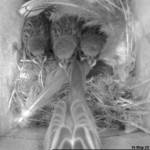
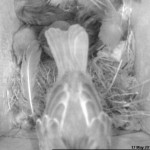
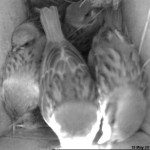
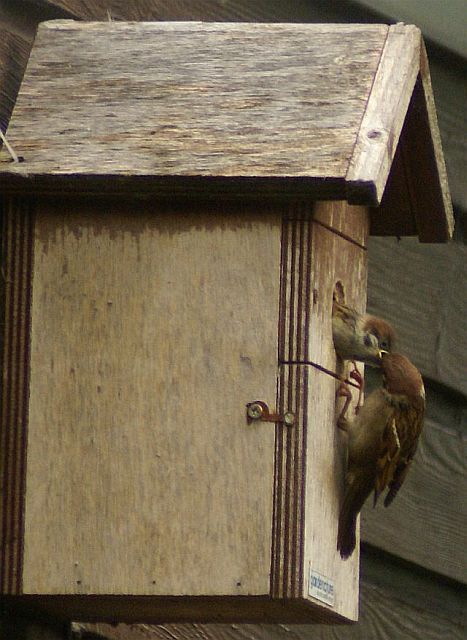
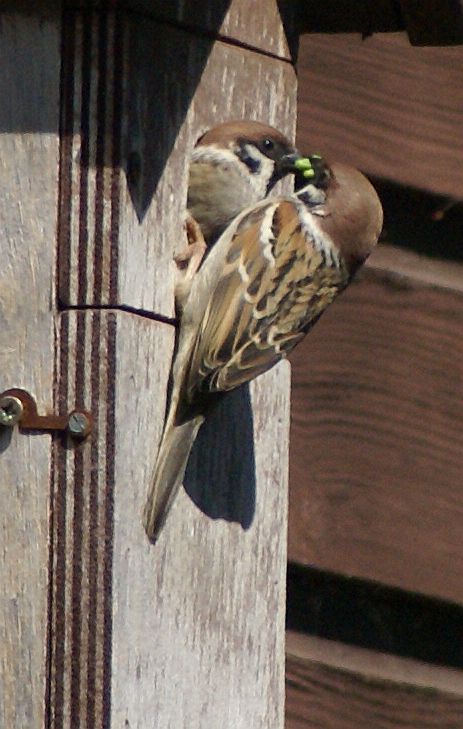
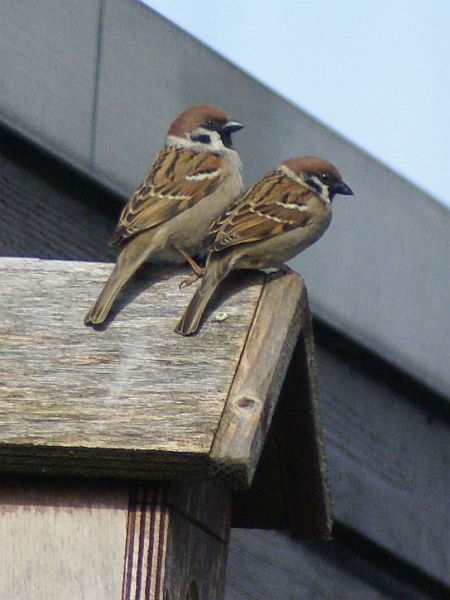
The Tree Sparrows nesting in our B&W birdcam box have successfully raised another brood of 5 chicks which fledged yesterday (Friday 24th June). Three of the chicks fledged by midday and the final two waited until it was a bit quieter, after the children had gone home to fledge at around 4 pm. On the last day, the adults only fed the chicks at the entrance hole and only entered the box to keep it clean of faecal sacs. The could be heard calling the chicks from nearby trees and from on top of the box to try and encourage them out.

Watch this video of the 4th chick fledging

The chicks will soon have to learn how to find food for themselves as the adults already appear to be preparing the nest to raise a third brood, so watch this space….

A Second Brood!- B&W Birdcam Box

2nd Brood

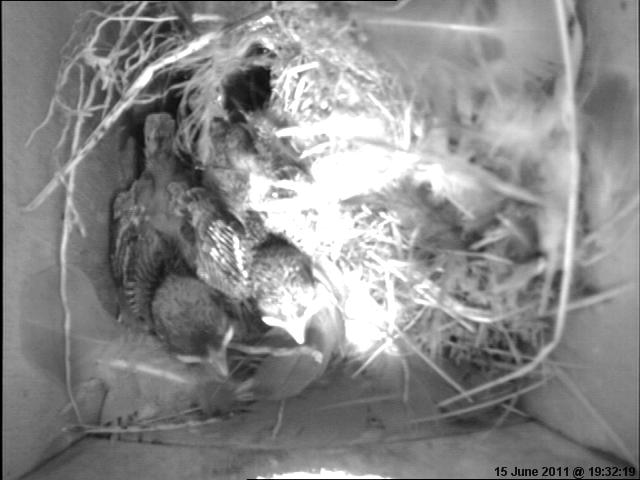
Although we still can’t see the main part of the Tree Sparrows’ nest, we know that they have been incubating a second clutch of eggs because the adults have been taking turns to spend long periods of time in the box. This morning, I listened to the live feed in the Infant classroom and I could hear many chicks chirping away! Watch the box from the outside , keeping your distance so as not to disturb the birds and see if you can spot the adults bringing in food for the chicks. Can you tell what type of food is being brought in? Hopefully it won’t be long before we start seeing the chicks peeping out from under the nesting material.

Update: 15th June – the chicks come out to be fed now and there are at least 5.

Birds and other wildlife you have seen – 2011

What birds and other wildlife have you seen  in your garden? Do you have any nest boxes or do you encourage birds into the garden by feeding them? What’s their favourite food?

Perhaps you’ve spotted something special during breaktime or lunchtime in school or spotted something while out for a walk.

Please share your observations by leaving your comments here.

Five Fledgling Tree Sparrows – B&W Birdcam Box

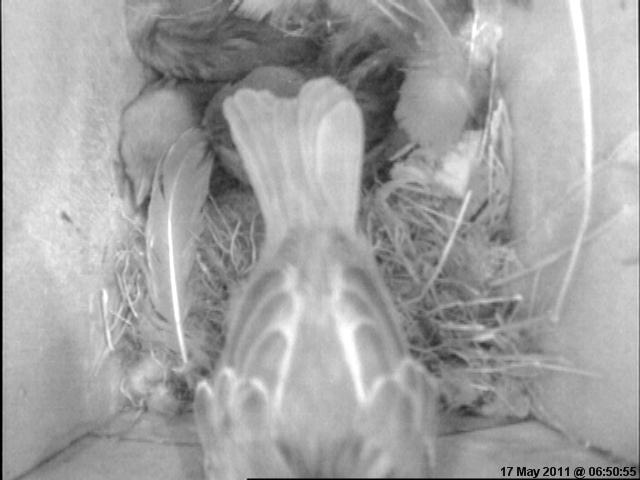
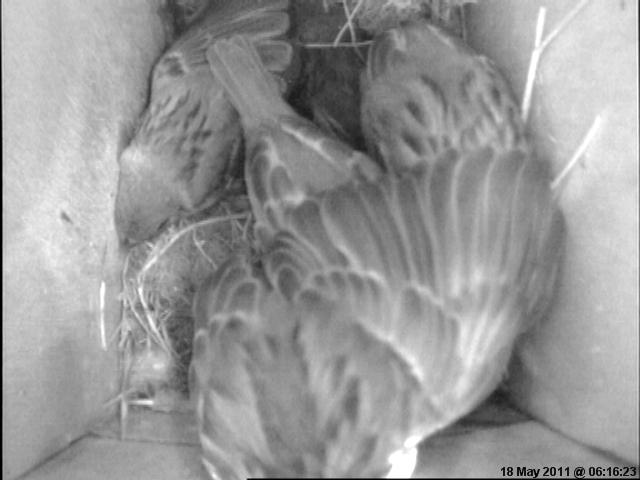
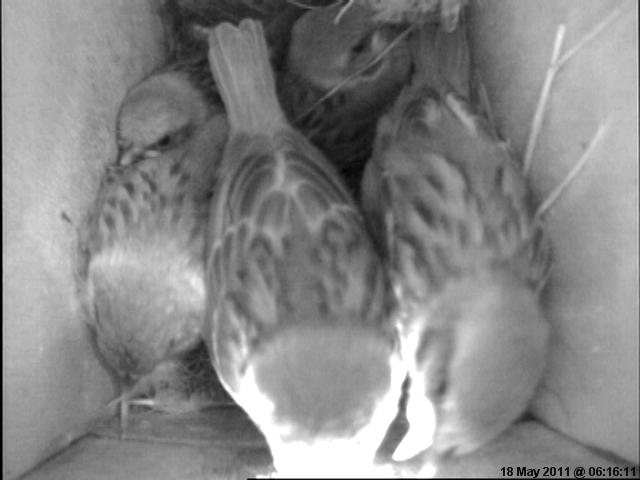
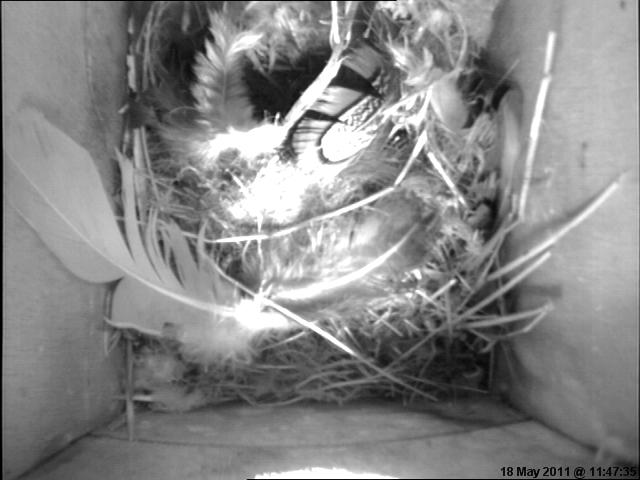
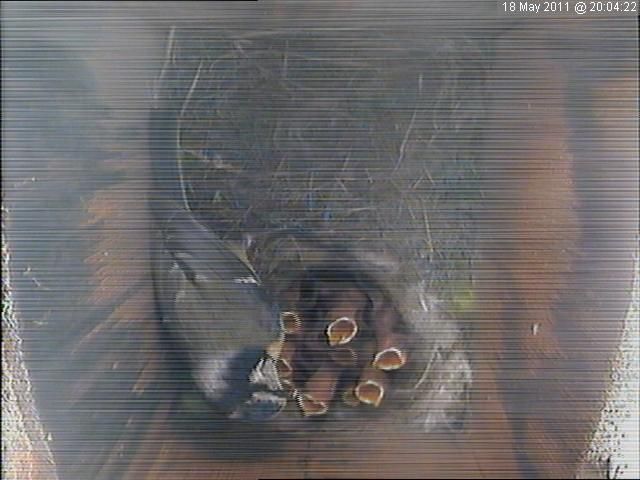
By Wednesday morning (18th May) the nest box had become  a bit of a squeeze for the five Tree Sparrow chicks which had grown rapidly since they hatched just over two weeks previously. They started the morning with a lot of wing stretching and flapping and  jumping up at the hole to have a look outside for returning adults, hoping for a good feed. The adults however had other ideas. Today was the day to tempt them out into the big wide world. They only entered the box to clean out any faecal sacs and any feeding was stictly at the hole. Both adults spent a lot of time on top of the box and in nearby trees calling for the chicks to come out. The chicks eventually fledged mid-morning.

Although the  fledglings are already very good at flying, they have stayed close to the school and can often be heard calling from nearby trees so that the adults know where to find and feed them.

The adults have been making regular trips to the box to clean out and repair the nest ready to raise another brood of chicks. Tree Sparrows have 2-3 broods a year and the next clutch of  eggs are often laid within 2 weeks of the previous brood fledging, so keep your eyes open for further activity.

We are very lucky to have Tree Sparrows nesting at Stretton Handley School. Their breeding population has dropped by more than 50% in recent times and so the Tree Sparrow appears on the Red List of birds of high conservation concern.

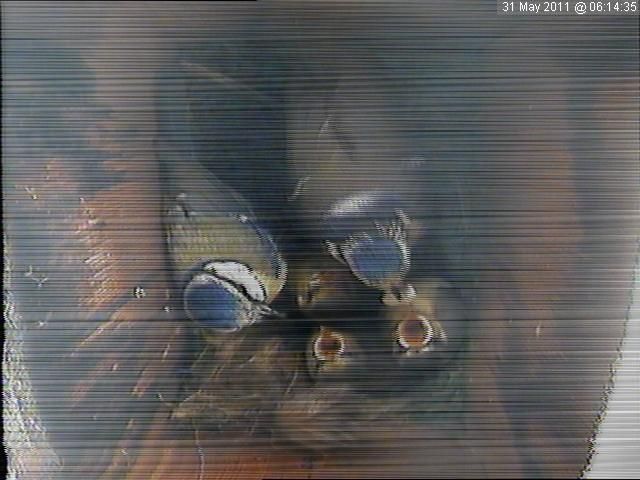
We Have Blue Tit Chicks (colour birdcam)

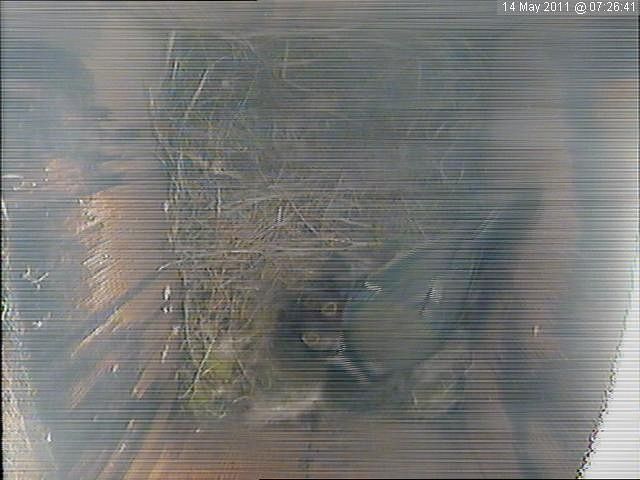
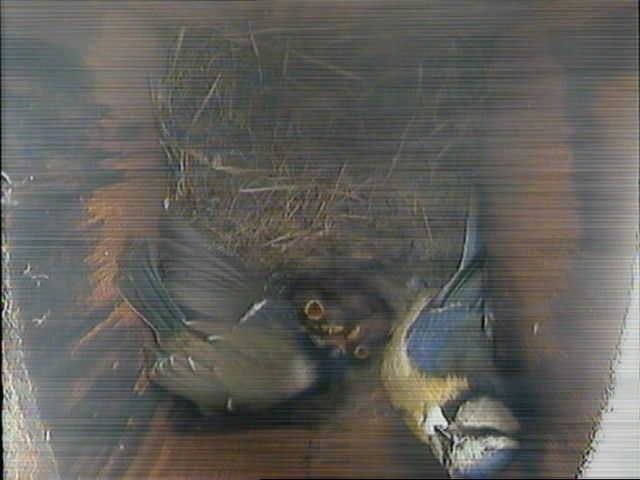
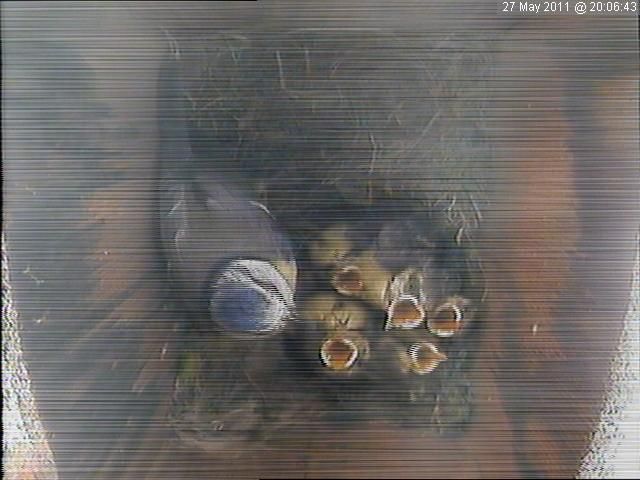
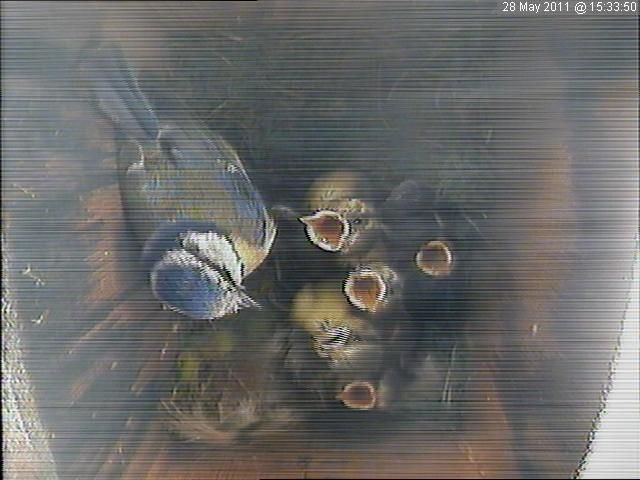
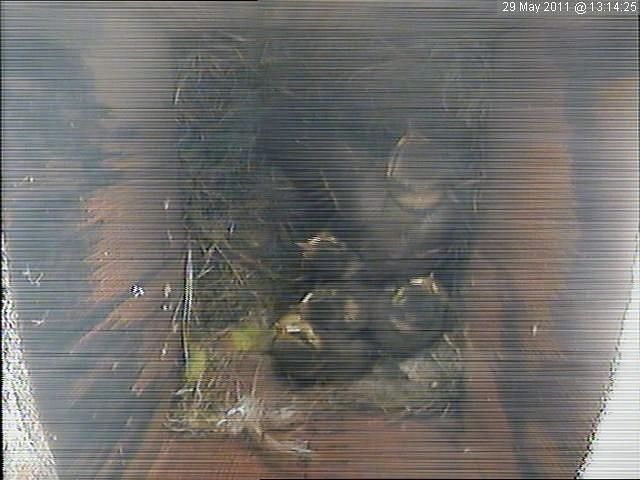
Nearly two weeks after the blue tits started incubating their 9 eggs, the chicks started to hatch today (13th May). It was really exciting for the Year 6s who were able to watch the first chick hatch during their ICT lesson! Hopefully, many more chicks will hatch over the next couple of days. It took a while for the adults to notice the chick and to start to try and feed it.

Update: Nine chicks hatched 13-14th May and three chicks fledged 2nd June.

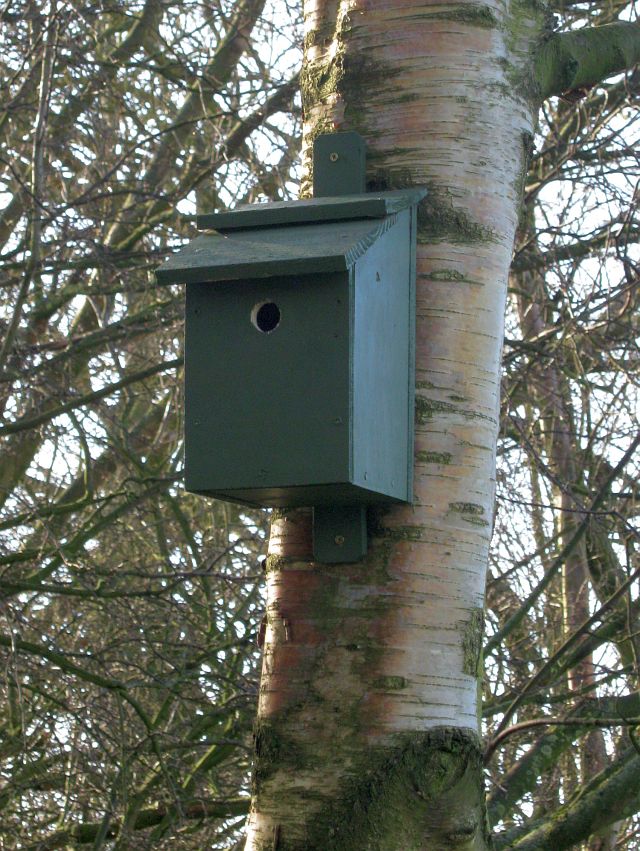
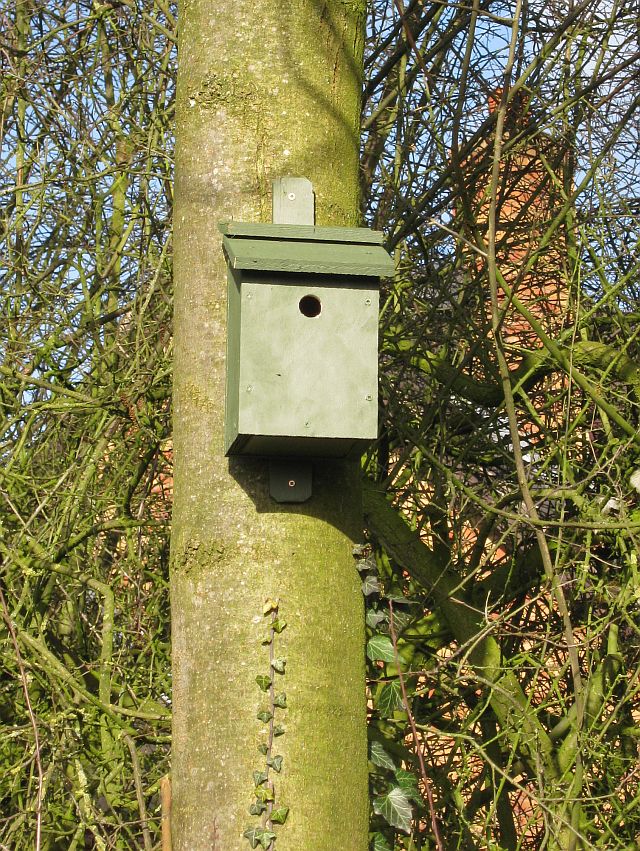
We also have blue tit chicks in the new bird box on one of the Silver Birch trees at the bottom of the playing field. Although there isn’t a camera in this box, we can see the adults flying in and out bringing food to the chicks.

Tree Sparrow chicks in the B&W Birdcam Box?

Grub up!

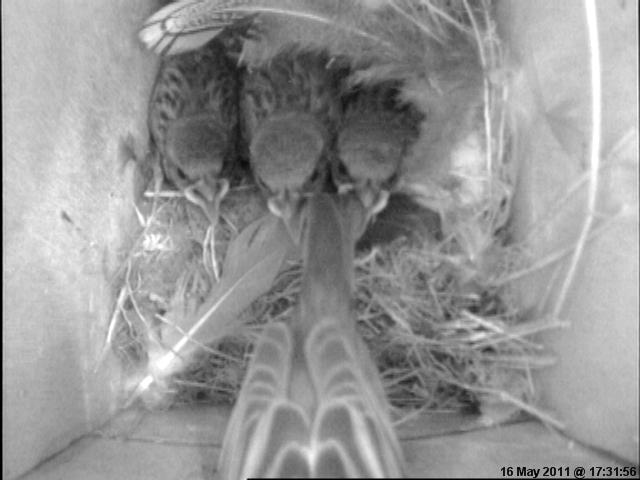
The Tree Sparrows have built a dome shaped nest which means they are hidden from view most the time when in the box. However, you may have noticed that the adult birds appear to be bringing food to the box this last week and if you get a chance to listen to the live video feed, you might hear chirping. Does this mean we have chicks?

If you are playing outside, take care not disturb the birds in our nest boxes, it’s a busy and exhausting time for them.

Some Tree Sparrow facts:

Clutch size: 5-6
Incubation: 12-13 days
Time to fledge: 15-18 days
Number of broods: 2-3

Can you hear the hungry chicks in this when both adults visit to feed them?

Can you spot three chicks in this video?

Blue Tits Nesting in the Colour Birdcam Box

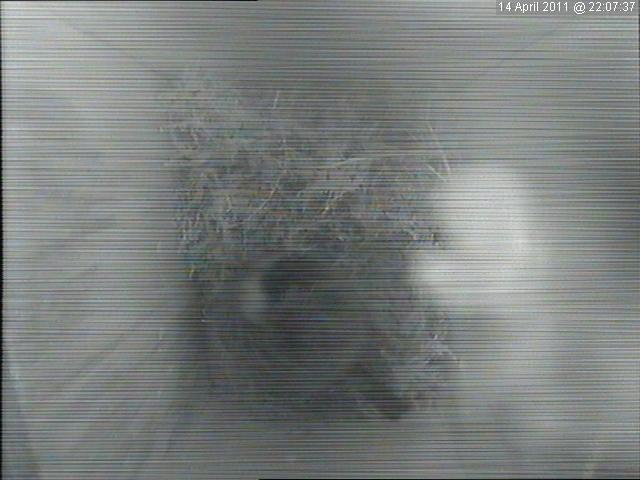
We’ve been having daytime visitors to our colour birdcam box for a while now. Earlier this year a Great Tit was regularly roosting in the box at night but today some blue tits have started nesting, taking out some of the droppings left by the Great Tit and bringing in moss. We will have to wait and see whether this nest is successful or not because a wasp has also been in the box for the last few days and may have even started building a nest too (white blob at the right of the birdcam picture).

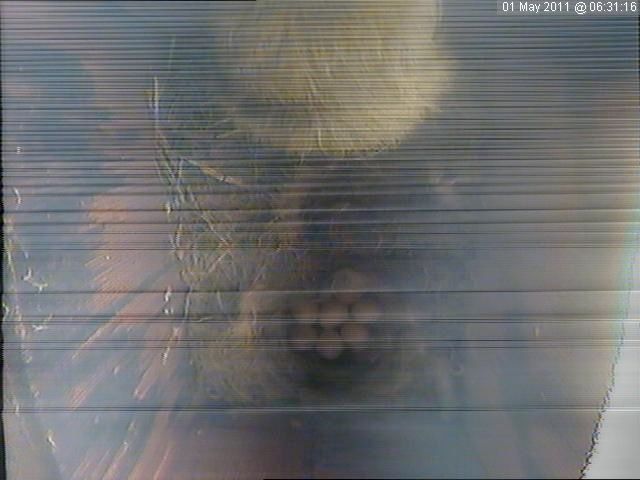
Update: The colourcam was offline for a while during the holidays. Four eggs were on view on the 27th April when the camera was switched back on. Incubation of the 7 or 8 eggs started around 1st May.

Please let us know what you have seen in our colourcam box by leaving a comment on this post.

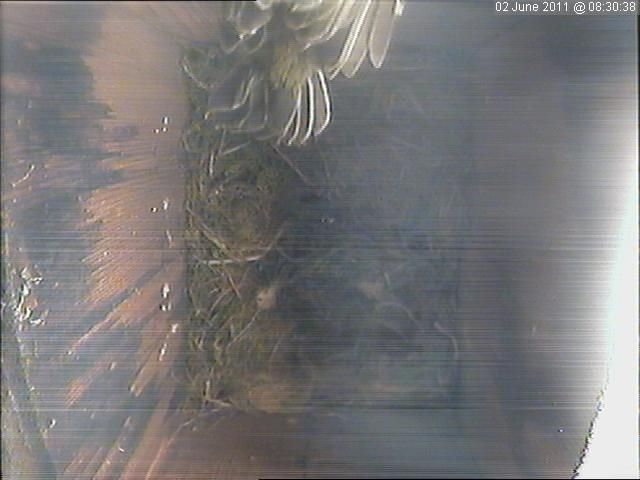
Tree Sparrow Nest Complete! – B&W Box

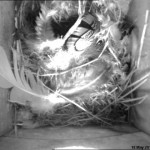
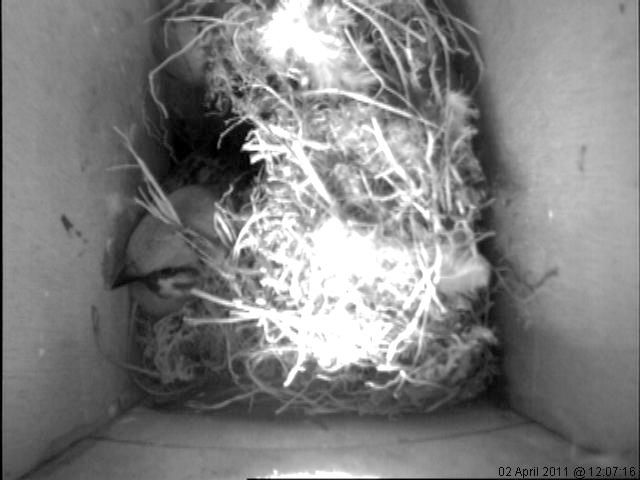
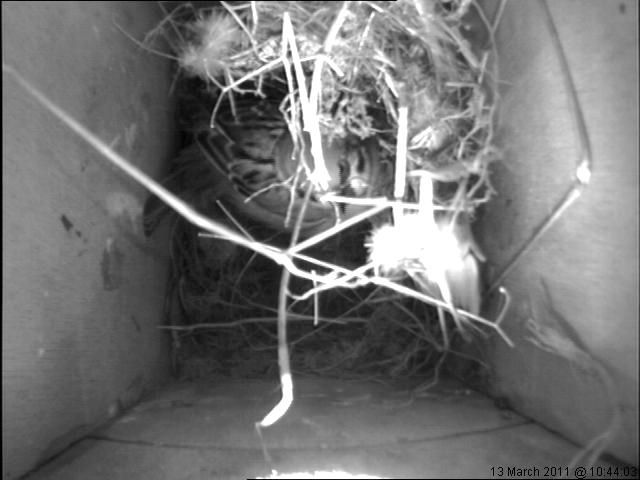
At the beginning of  March, blue tits and tree sparrows were regular visitors to the box although the roosting blue tit stopped sleeping in the box at the end of February. By the middle of March the blue tits were being seen less often and the tree sparrows had started bringing in more nesting material. The nest began to take on a more domed shaped with the tree sparrows often disappearing under the grassy material through an entrance hole to one side of the box. The nest now looks to be complete although the birds have been bringing in feathers to line the nest and spend quite a bit of time in the box.

Tree Sparrows start to breed at the beginning of April, they may well have laid some eggs already which are hidden from sight. We shall have to watch the live feed more at school for evidence that eggs are being incubated. How do you think we might tell whether there are eggs or chicks in the nest?

Update: Checking the live video feed in school on 27th April, it appears that the Tree Sparrows are taking in turns to be in the box, which suggests they are incubating some eggs.

New Nest Boxes and Other Wildlife Around School

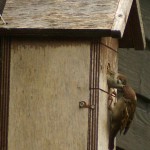
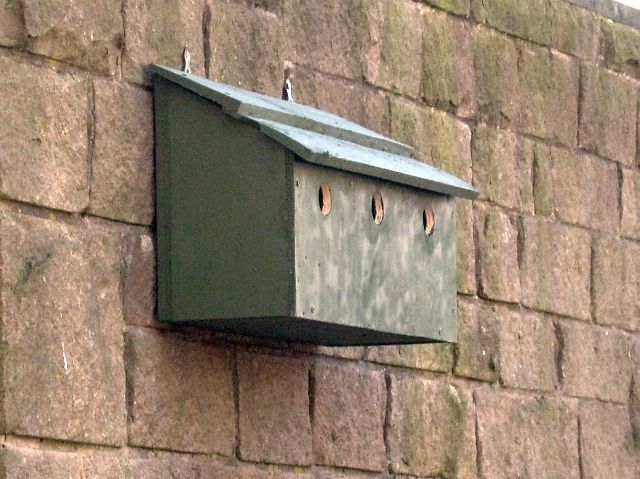
You may have noticed that a few more nest boxes have been put up around school, have you spotted them? These boxes haven’t got cameras in them, so if you see any birds using them, let us know by leaving a comment on this post. Blue tits have already been seen investigating the sparrow terrace box outside Class 2 and one blue tit had even grander ideas, coming indoors to investigate the classroom!

Frogspawn was spotted in the school pond on 14th March and newly hatched tadpoles on 25th March.

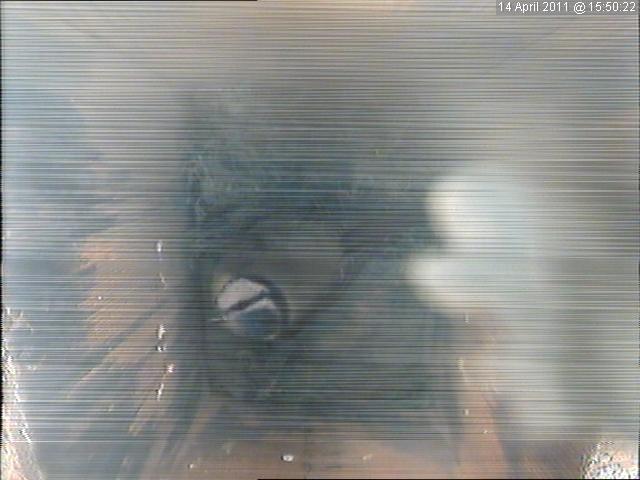
A roosting bird in our B&W box too!

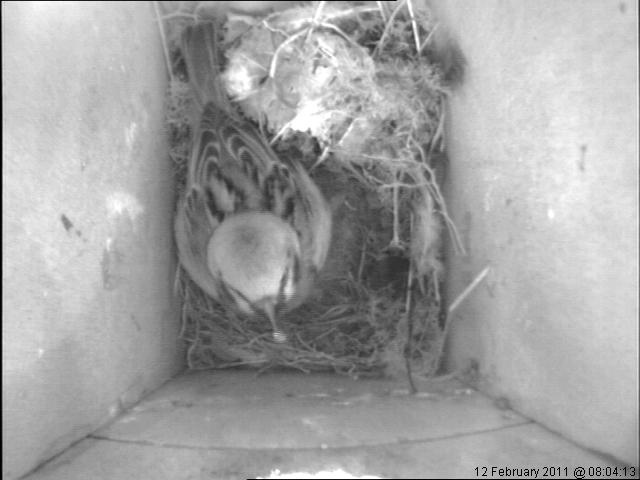
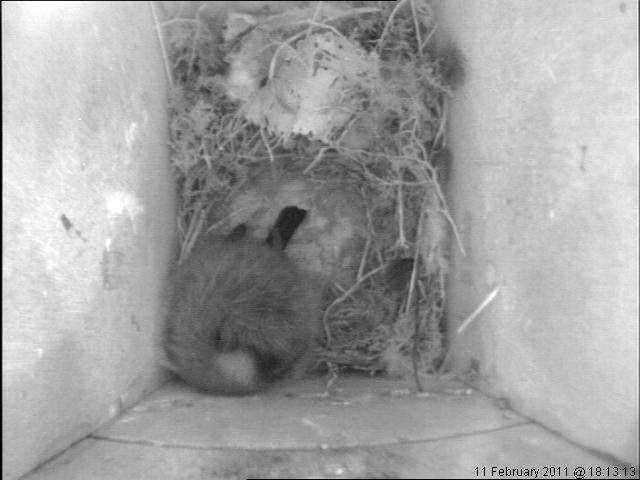
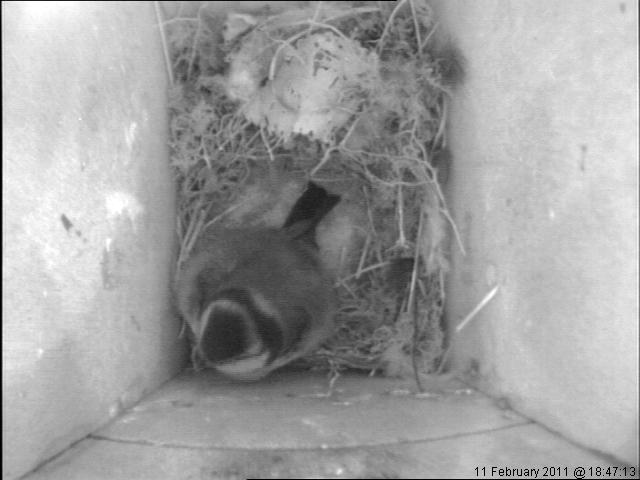
Both our birdcam boxes were cleaned out at the end of October, so imagine our surprise when we switched on our B&W birdcam  for the first time today and saw that it had a nest in it!

It looks like a blue tit has come in to roost tonight but is it the same bird that has been bringing in nesting material? Keep an eye on the box during the day and let us know what you see.

Update 26th February: The blue tit appears to have given up on roosting in the box at night but the nest is growing and both blue tits and tree sparrows visit during the day.

Big Schools’ Birdwatch

This year we took part in the Big Schools’ Birdwatch on 1st February. Many enthusiastic children helped me complete our list for the survey which involved recording the maximum number of each species seen at any one time during one hour. We managed to spot 15 different species. Thank you to everyone who took part.

Blackbird 3 Robin 1
Blue tit 2 Rook 2
Chaffinch 8 Starling 1
Dunnock 1 Woodpigeon 2
Goldfinch 5 Bullfinch 3
Great tit 3 Tree sparrow 3
Greenfinch 1 Reed bunting 1
Long tailed tit 5

Did anyone take part in the Big Garden Birdwatch at home?

Keeping out of the cold in our colour birdcam box

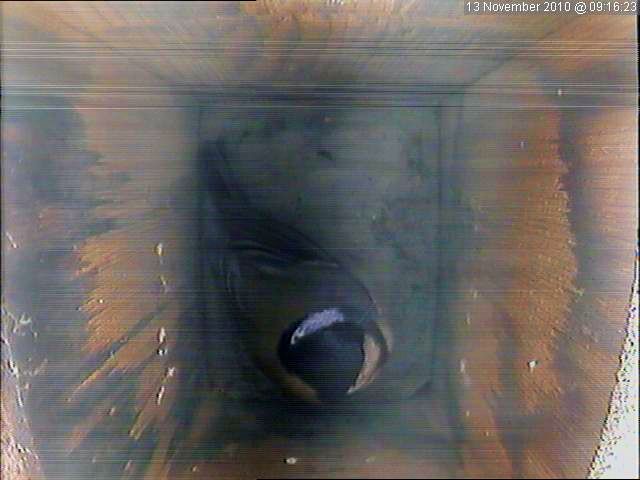
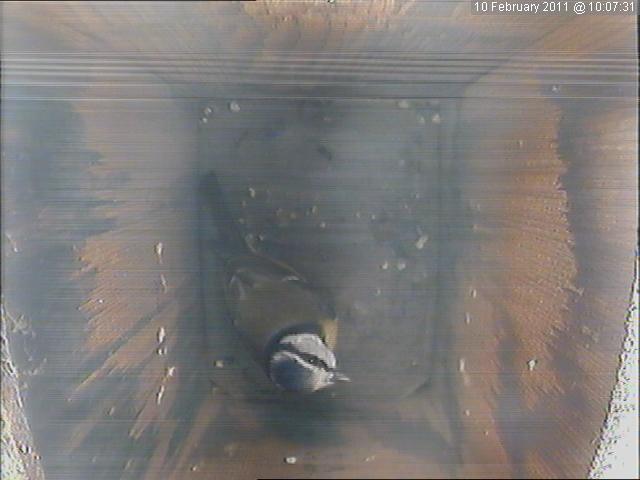
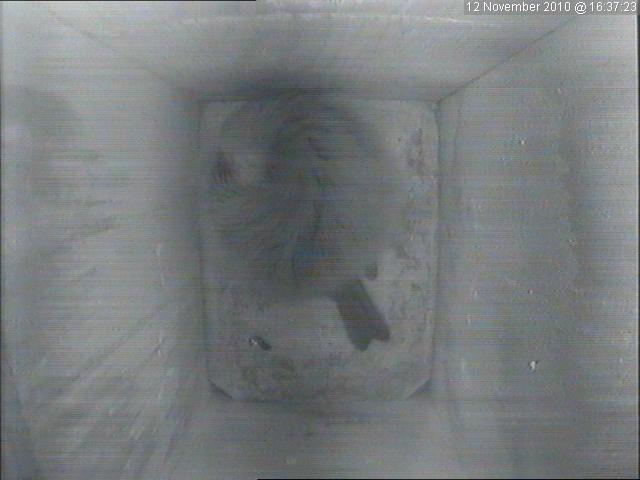
If you check out our colour birdcam box after dark, you might be lucky to see our night time roosting bird all fluffed up to keep warm. Leave a comment if you think you know what type of bird it is, or if you discover what time it comes in to the box at night or leaves in the morning.

We have also spotted birds visiting the box during the day, such as the Great Tit pictured below.

Winter Visitors

Keep an eye out for migrating birds. At this time of year, many of our Summer visitors have left or are leaving for the warmer climates of Africa and the Mediterranean. Winter visitors may start to arrive from colder regions such as Scandinavia and northern Europe. Other migrants may be simply passing through. Numbers of  some of our more common birds, such as blue tits or black birds, may be boosted by visitors from other countries. I wonder if they speak  the same bird language! Check out the RSPB website for more information on migration.

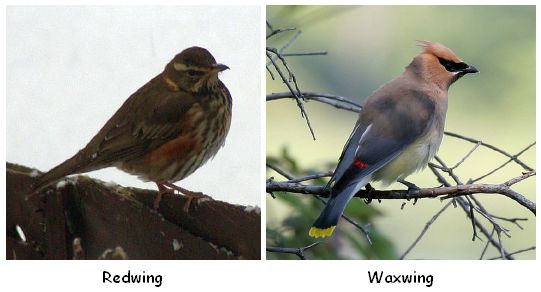
Two birds to look out for this winter are Waxwings and Redwings. Both these birds love our hedgerow and garden berries and may also be spotted eating yew berries in churchyards.

If you take part in the RSPB Big Garden Birdwatch at the end of January, let us know how you got on.

Time for a clean out!

Both our nest boxes have been cleaned out ready for the next nesting season. If you have nest boxes at home, now is a good time to clear out any old nests (it is only legal to do this between 1 August and 31 Jaunuary).  The RSPB website has some advice on how to do this.

We will upload pictures from the boxes every now and then to check whether we have any night time winter visitors. Temple Normanton Primary School have a roosting blue tit in theirs.

School Wildlife 2010

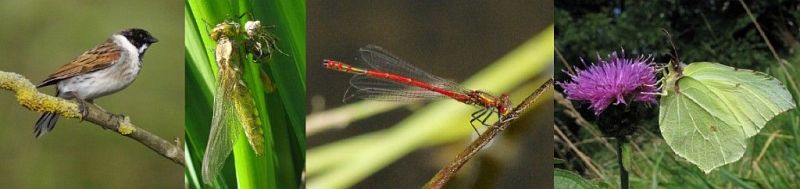
We are very lucky at Stretton Handley to have a school situated in such beautiful surroundings. The school grounds provide a number of different habitats for wildlife including a pond, a ‘wild’ area and deciduous and non-deciduous trees and hedgerows.

Please use this post to report any interesting wildlife you spot around school. If you can, take a photograph so you can share what you have seen. Class 1 had a rabbit visit their play area last term and we also had a rather large wasp nest in one of the sheds.